

The Stand Opens a Chelsea Market Comedy Club. What the Second Room Teaches Hospitality Founders
The Union Square comedy club and restaurant opened a 3,500-square-foot second room at Chelsea Market on Nov. 6, mixing stand-up with a market-vendor kitchen. The expansion is a useful case study for New York hospitality founders thinking about a second location.
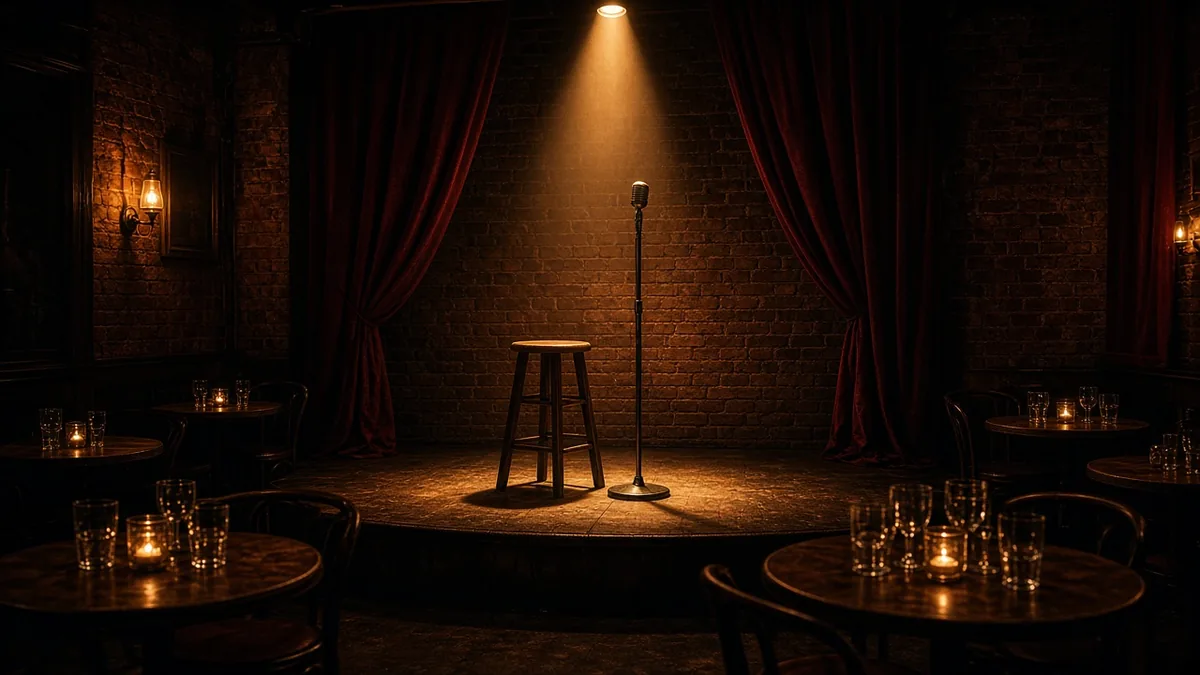
NEW YORK — Fourteen years after opening near Union Square, The Stand has a second room, and it sits inside one of Manhattan’s most visited food halls. The Stand West opened Nov. 6 at 407 West 15th Street in Chelsea Market, according to the club’s site and preview coverage from DiningOut and What Now New York. It is a comedy club and restaurant in the same package as the original, built for stand-up, podcast tapings, watch parties and private events.
The first Stand, at 116 East 16th Street, was founded in 2012 by brothers Paolo and Cris Italia along with Patrick Milligan and David Kimowitz, according to What Now New York. Co-founder Paolo Italia told DiningOut the new room was a response to demand. “With the growing demand for live entertainment, particularly stand-up comedy, opening The Stand West is a natural extension of what we’ve built in Union Square,” he said. “Chelsea Market gives us an opportunity to bring The Stand experience to a new neighborhood, reach new audiences, and introduce more New Yorkers to what makes our club special.”
How Big the Bet Is
The new venue is 3,500 square feet and seats 150 to 170 guests on a regular show night, a size DiningOut notes is meant to keep the room feeling intimate. What Now New York reported it can host up to 244 people for private events, and that the room includes a 16-foot-by-8-foot curved LED screen for digital content that can travel beyond the people in the seats.
That mix — a smaller nightly capacity, a larger private-event number, and a screen built for tapings — is the business design. A second comedy room in New York is expensive to keep dark. Buyouts and tapings are how the box earns money when walk-up ticket sales would not cover the rent. The club’s site advertises the space for “buyouts, tapings, launches and parties” and lists the room as open nightly from 6 p.m. to 1 a.m.
The brand arrived with proof it could book the room. Before the official opening, The Stand West had already hosted sets by Dave Chappelle, Dave Attell and Michael Che, according to both DiningOut and What Now New York. Name recognition helps a second location, but it is not a strategy by itself. The harder part is filling Tuesday in January.
Food From the Market Next Door
Instead of building a full kitchen concept from scratch, the club is using Chelsea Market as a commissary. What Now New York reported that restaurateur Peter Tondreau’s N’Between Bar is leading the first food collaboration, with plans to add dishes from Maki A Mano and his other concepts. DiningOut highlighted a karaage fried chicken with nanban sauce, tartar sauce and lemon, and a fried chicken sandwich on a house-made bun, served with fries and a Hot Ones House Hot Sauce aioli.
The bar is a larger part of the new room than it was at the original. DiningOut reported that The Stand West has about twice as many draft lines as the Union Square location. Beverage director Deena Sayers created cocktails for the opening, including Clean Set, a lychee martini made with Arabian jasmine-infused vodka, clarified lychee and elderflower, and Dirty Set, a whiskey sour made with bourbon, PX sherry, lemon, olive brine, olive oil, egg white, tarragon and Castelvetrano olives. What Now New York also listed The Usher, a popcorn-inspired spritz.
The lesson is less about the cocktail names than about the constraint they solve. Chelsea Market already has foot traffic and vendors. Partnering with people who already cook there cuts the risk of a second kitchen and gives market regulars a reason to walk over for a show.
What a Second Room Changes
A one-location club lives or dies on its neighborhood and its regulars. A two-location club has to decide what stays identical and what can change. The Stand kept the comedy-plus-dinner format and the founding team. It changed the address, the scale of the bar, the food supply chain and the private-event math. That is a more disciplined expansion than opening a copy of East 16th Street on the West Side and hoping the same crowd follows.
Chelsea Market’s audience is a mix of tourists, office workers and New Yorkers who already came for food. Some will buy a ticket. Some will have a drink and leave. The club still has to turn strangers into a list it can text when a midweek show needs bodies in chairs.
If you are a hospitality founder weighing a second address, The Stand West is useful as a checklist. Can the new neighborhood supply customers your first room never sees? Can the room earn money when it is not presenting a headliner — through buyouts, tapings or a bar that stands on its own? Can you borrow infrastructure, such as a food hall or a vendor kitchen, instead of recreating every function? And do you have enough of a reputation that the first month is not a cold open?
Show listings and tickets are on The Stand West’s site. The original room remains at 116 East 16th Street.
Entrepreneurs Of New York is an independent publication and is not affiliated with The Stand or Chelsea Market.