

Sushiro Left the U.S. in 2016. Now Japan's Biggest Conveyor-Belt Sushi Chain Is Back With a 146-Seat Times Square Bet and a No-Tipping Model
Sushiro Times Square opens Nov. 19 at 667 Eighth Avenue, with three floors, more than 200 menu items, sushi priced at $5 to $10 a plate and, according to Japanese press reports, a no-tipping policy. Its first U.S. try, a takeout-focused format in New York, closed within a year.
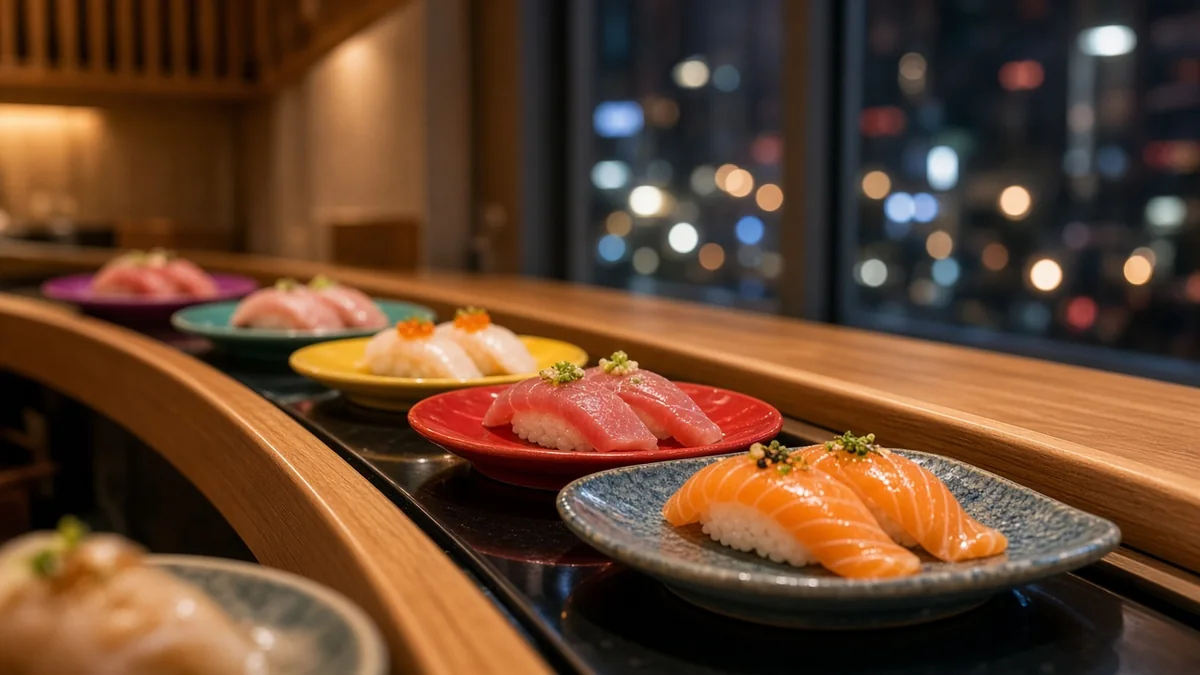
NEW YORK — Sushiro, the conveyor-belt sushi chain that has led Japan’s kaiten sushi industry in annual sales for years, is opening in Times Square on Thursday, Nov. 19. Its parent company calls it Sushiro’s first U.S. location. It is actually the brand’s second try in New York, and the way it has changed its approach is a lesson for any restaurant brand expanding into the city.
The Restaurant
Food & Life Companies, the Osaka-area company that owns Sushiro, announced on Nov. 9 that Sushiro Times Square will open at 667 Eighth Avenue, at West 42nd Street. The plan calls for three floors: conveyor-belt dining with 146 seats on the first and second floors, and three private rooms in the basement. The menu will have more than 200 items, including sushi, side dishes, desserts and drinks.
Eater New York reports that the restaurant covers 9,000 square feet and will be open daily from 11 a.m. to 11 p.m. Guests order from large digital screens at their booths, and dishes arrive by conveyor belt. Eater says most sushi will cost $5 to $6, with premium pieces at $8 to $10, and diners can play digital games at the table for prizes. The basement floor is for reserved private dining with prix fixe menus.
Why It Left, and Why It’s Back
According to the Japanese newspaper Sankei Shimbun, Sushiro first entered the U.S. in New York in 2015, but a format built mostly around takeout didn’t catch on as expected. It closed both of its stores in 2016, a company spokesperson told the paper. This time, Sankei reports, the company is recreating the full conveyor-belt experience it runs in Japan.
Sankei also reported two details aimed at the New York market. Plates of two pieces will be priced in four tiers from $5 to $10, and with inflation weighing on diners, Sushiro plans a pricing system that in principle requires no tip.
The expansion fits a larger plan. In a May announcement, Food & Life said it operates in 10 countries and regions and that its top priority under its mid-term plan is growing overseas operations to 35% of revenue. It said Sushiro had 948 locations worldwide as of the end of April.
The Competition
Sushiro is not the first Japanese kaiten chain in the U.S. Sankei reported that Kura Sushi, which opened its first U.S. restaurant in 2009, has 98 U.S. locations as of November and plans to reach 100 in December. In New York, Eater notes, Kura operates in Flushing.
Lessons for Restaurant Founders
A failed format isn’t a failed market. Sushiro’s first U.S. attempt didn’t fail because New Yorkers rejected sushi. According to Sankei, it failed because the takeout-heavy format didn’t match demand. Before you give up on a neighborhood, ask whether the problem was the place or the concept.
Bring the experience, not just the menu. The conveyor belt, screen ordering and tabletop games are the product as much as the fish. When a concept’s appeal is the experience, scaling it down to save on rent can remove the reason people come.
Price transparency is a competitive tool. Tiered plate pricing and a no-tip policy, if Sushiro carries it out as reported, let a diner know the total before sitting down. That’s a meaningful difference in a city where menu prices and tipping expectations keep rising. Any operator considering a no-tipping or service-included model should work out wages, payroll costs and menu prices first, and check current New York labor rules with an advisor.
Big footprints need volume. A 9,000-square-foot, three-floor restaurant open 12 hours a day at Eighth Avenue and 42nd Street is built for heavy foot traffic. Low-priced plates only work at that scale with fast turnover, which is what the conveyor belt and screen ordering are designed for.
Private rooms are a second business. The basement private dining rooms with prix fixe menus give Sushiro a way to sell group bookings and higher-priced meals alongside cheaper walk-in plates.
What’s Next
Food & Life describes the store details as tentative, and Sushiro hasn’t publicly said how many more U.S. locations it plans. For now, it’s starting in one of the most crowded and expensive blocks in the country, on the theory that what works in Osaka can work at 42nd Street.
Entrepreneurs Of New York is an independent publication and is not affiliated with Sushiro or Food & Life Companies.