

Sidewalk Cafés, Permits and City Contracts Are on Today's Ballot. What NYC's Five Questions Mean for Small Businesses
New York City voters decide five charter questions today on sidewalk cafés, city contracting, land use, building permits and the rainy day fund. A plain-English guide to what each would change for small-business owners, plus the time-off-to-vote rules employers should know.
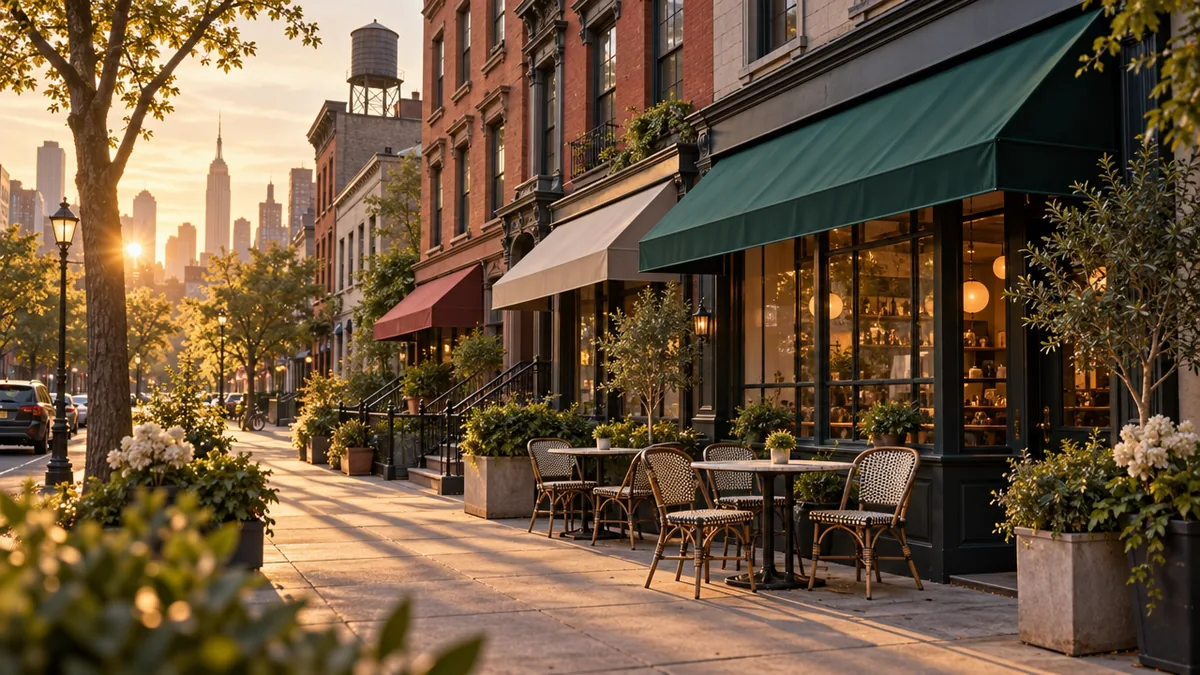
NEW YORK — Most of the attention on Election Day goes to the top of the ballot, where Gov. Kathy Hochul faces Republican Nassau County Executive Bruce Blakeman. But New York City voters will also find five questions on the back of their ballot, and several of them go straight to how a small business deals with City Hall: sidewalk cafés, city contracts, land use and building permits.
Polls are open from 6 a.m. to 9 p.m. today. Here’s what each question would do, based on the official explanations published by the city’s NYC Votes voter guide. We are not endorsing a “yes” or “no” on any of them.
Question 1: Sidewalk Cafés and Other Uses of Public Space
This is the one restaurant owners will notice first. Today, a business or property owner that wants to put something permanent on a sidewalk or street, such as an accessibility ramp, planters, benches or an outdoor café, needs a “revocable consent” from the city. According to NYC Votes, the agency must hold a public hearing, the applicant pays to publish ads in local newspapers, and for sidewalk cafés the City Council can vote to reject a permit even after the Department of Transportation approves it.
A “yes” vote would make those hearings optional, drop the newspaper-ad cost (notices would still run in the City Record) and treat sidewalk cafés like other revocable consents, removing the Council’s power to reject them. Community boards, Council members and borough presidents would still be notified and could comment. The new process would start March 1, 2027, and would not apply to petitions already submitted.
What it means for you: If you’re planning a café or ramp application, timing matters. A filing made before March 2027 would stay under the current rules either way.
Question 2: Less Paperwork for City Contractors
Every business that wants to bid on city work currently fills out the same detailed questionnaire, whatever the contract is worth. Under Question 2, the Procurement Policy Board would decide what goes in that questionnaire and could let smaller contractors or lower-value contracts answer a shorter set of questions. The board would also have to meet at least quarterly starting Jan. 1, 2027, and the mayor could delegate approval of certain contracts over $5 million to agency contracting officers.
What it means for you: If you’ve avoided city contracts because of the paperwork, a “yes” result wouldn’t change anything overnight. The actual shorter questionnaire would depend on rules the board writes afterward.
Question 3: Street Projects, City Property and City Office Leases
Question 3 bundles three changes. It would clarify that DOT can start safety-driven street projects, like bus or bike lanes, before notifying local officials when safety data supports it. It would let sales or leases of smaller city-owned lots use a shorter review decided by the City Planning Commission, without a final Council vote, if no environmental impact statement is needed. And it would drop Council and Planning Commission approvals for city office leases.
What it means for you: Merchants along a corridor slated for a redesign could see projects move faster, with less formal advance notice in limited safety cases. Developers and small builders eyeing city-owned lots could see a quicker path.
Question 4: One Permit Hub for Construction
Renovating a storefront often means filing with several agencies through separate systems. Question 4 would require the Department of Buildings to build a single, centralized system for permit applications and approvals by 2030, with all city agencies required to use it. It would also let the DOB commissioner appoint more officials who can approve construction documents, and move waterfront construction permitting from the Department of Small Business Services to DOB.
What it means for you: The central hub has a 2030 deadline, so it’s a long-term change. More officials authorized to sign off could matter sooner, since that part would take effect once results are certified.
Question 5: A Savings Target for the Rainy Day Fund
Question 5 would set a goal of keeping reserves equal to at least 12% of the previous year’s city tax revenue and require a published plan for deposits by May 2027. Deposits would still go through the normal budget process and could be skipped in hard years.
What it means for you: No direct effect, but bigger reserves give the city more cushion in a downturn.
For Employers: Time Off to Vote
New York’s election law gives employees up to two hours of paid time off to vote if they don’t have “sufficient time” outside their shift, defined as four consecutive hours between the polls opening and the start of their shift, or between the end of their shift and the polls closing. With polls open 6 a.m. to 9 p.m., a 9-to-5 worker isn’t covered, but a 9-to-6 worker is. The State Board of Elections says employees are supposed to give two to ten working days’ notice, and employers can’t require workers to use other paid leave for it.
What Happens Next
Results are expected tonight after polls close at 9 p.m. Any approved charter change takes effect on the schedules above, most of them once the vote is certified. If you run a restaurant, contracting business or construction firm, bookmark these dates; the practical details will come later in agency rules.