

In a City of Pitches, New York Founders Win on Stage
In New York's crowded market, a signature talk helps founders stand out. Speakpreneur's Paul Getter on using NYC panels and stages to win clients.
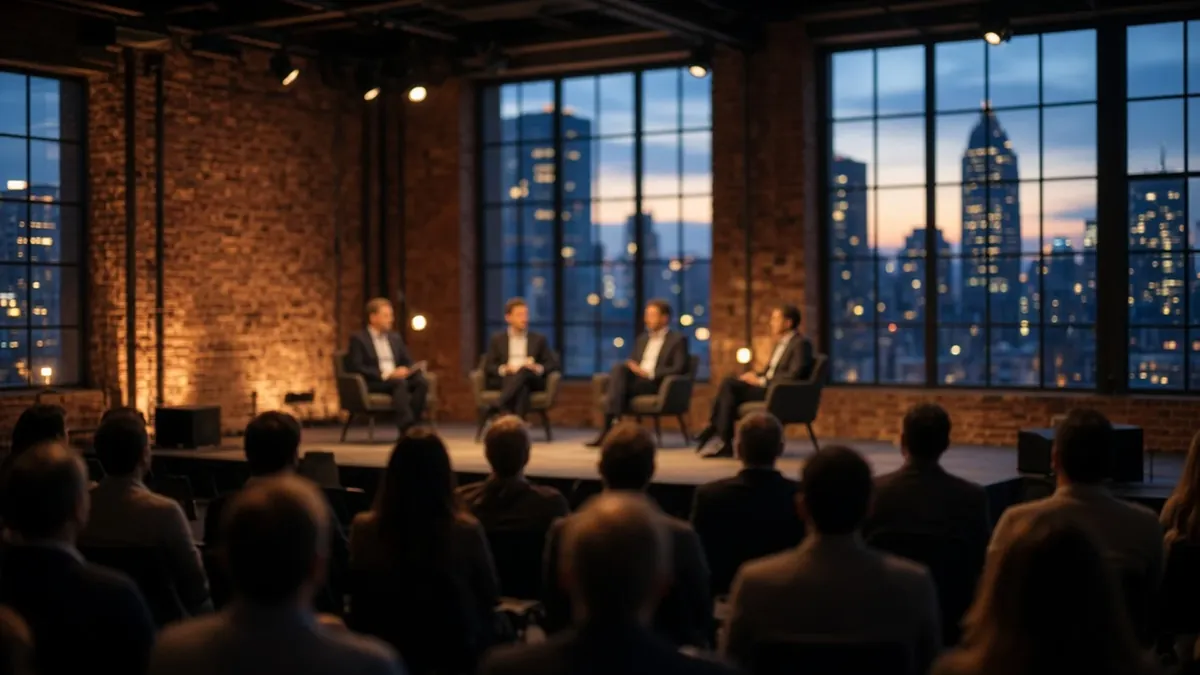
NEW YORK — Spend a week going to startup events in Manhattan and Brooklyn and you’ll notice something. The room is full of capable founders, and almost all of them introduce themselves the same way: a name, a company, a one-line pitch that’s forgotten by the time the wine is poured. The people who leave with business cards, follow-up meetings and invitations to the next event are usually the ones holding the microphone.
That gap is what Paul Getter, founder of the Naples, Florida–based speaker-training company Speakpreneur, focuses on. His argument, aimed squarely at markets as crowded as New York, is that a founder’s most underused asset is a single prepared talk. It’s built once, sharpened over and over, and taken to every panel, meetup and conference stage the city offers.
The Noise Problem Is Worse Here
New York concentrates finance, media, fashion, real estate and tech into a few square miles. That density is an advantage until you realize every buyer you want to reach is also being pitched by dozens of rivals. Clever ads and polished decks rarely break through. Visible, credible expertise does.
There is data behind that instinct. When Edelman and LinkedIn surveyed nearly 3,500 executives for their 2024 B2B Thought Leadership Impact Report, 73% of B2B decision-makers said a company’s thought leadership is a more trustworthy measure of what it can do than its marketing materials or product sheets. Getter’s point is that a talk delivered live in front of the people you hope to sell to is the most direct form of thought leadership a founder can produce.
Panels Are Auditions, Not Favors
New York runs on panels: coworking happy hours, accelerator demo nights, industry association breakfasts, university entrepreneurship weeks. Many founders treat a panel invitation as a polite favor to the organizer and show up with nothing prepared.
Getter suggests the opposite. Every panel seat is an audition for a bigger stage. Founders who have a signature talk can answer any moderator’s question by pulling a story, a framework or a point of view from that talk. The answers sound sharp because they’ve been tested. Organizers notice, and they remember who to call when they need a keynote.
A useful exercise for NYC founders: list every recurring event in your industry within a subway ride, then rank them by who is in the audience, not by how prestigious they look. A 40-person breakfast full of your buyers beats a 400-person mixer full of other founders.
Building the Talk New Yorkers Will Sit Through
New York audiences are impatient, and Getter’s approach suits that. In his framing, a signature talk needs one clear idea, a personal story that proves you’ve lived it, and a practical takeaway the audience can use the next morning. Skip the company history and the six slides of logos. Open with the problem the room already feels.
In a tough room, Getter argues, nobody cares where you went to school; what matters is whether you can solve the problem keeping the audience up at night.
Getter also encourages founders to build a short version and a long version. The five-minute cut works for panel answers and pitch nights. The 30- to 45-minute version is for workshops and keynotes.
The Bigger Prize: TEDx and Beyond
For founders with bigger ambitions, independently organized TEDx events are a common target. TED reports more than 4,000 TEDx events each year worldwide. But TED’s rules are strict: talks typically run under 18 minutes, speakers aren’t paid, and they cannot promote their own products, books or businesses. A New York founder chasing that stage needs an idea-first version of the talk, with the sales pitch removed.
From Applause to Pipeline
The real test of a talk is what happens the following week. In the Edelman–LinkedIn data, nine in ten decision-makers and C-suite executives said they are more receptive to outreach from companies that consistently produce high-quality thought leadership. For a New York founder, that means a follow-up email after a strong panel lands very differently from a cold one.
Getter’s advice is practical. Give the audience one clear reason to connect: a checklist, a short diagnostic or a booking link. Record every appearance so the clips can work on LinkedIn for months. And keep a simple spreadsheet tracking which stages actually produce clients, so next year’s calendar is built on results, not invitations.
What It Looks Like in Practice
Consider three hypothetical New York founders. A fintech founder in the Flatiron District turns her compliance horror stories into a 20-minute talk, “The Audit That Almost Killed Us,” and pitches it to accounting and finance breakfasts, rooms full of the CFOs she sells to. A consumer-brand founder in Brooklyn builds a talk about launching on a shoestring budget and takes it to retail and e-commerce meetups, where wholesale buyers and investors sit in the audience. An agency owner in Midtown offers a free monthly lunch-and-learn at his own office, so he controls the guest list and the follow-up.
None of them is a professional speaker. Each picked one story, one audience and one repeatable venue, and that focus is the point. Getter’s approach favors depth over volume: the same talk, given to the right kind of room, refined a little more each time, until it reliably brings in conversations.
In a city that rewards anyone who can rise above the noise, a sharp, rehearsed talk is one of the few advantages that’s fully within a founder’s control.
Speakpreneur Live: Upcoming Dates
New York founders looking to build and test their signature talk in a live setting can attend one of Speakpreneur’s upcoming events:
- Philadelphia (2-Day Workshop): Nov. 6–7, 2026 — Tickets
- Austin (2-Day Workshop): Nov. 13–14, 2026 — Tickets
- Arlington (Message to Money Mastermind): Nov. 20, 2026 — Tickets
- Dubai (2-Day Mastermind): Dec. 3–4, 2026 — Tickets
- Milwaukee (2-Day Workshop): Dec. 18–19, 2026 — Tickets
Philadelphia is the closest stop, a short train ride from Penn Station. Details are at speakpreneur.pro, and questions can go to support@speakpreneur.com.