

The Shadery Raised $3 Million to Make the Window Shade a Repeat Purchase. A Glossier and Daily Harvest Finance Veteran Bets on Swappable Fabric
The Shadery, which sells motorized Roman shades whose fabric can be swapped without replacing the hardware, raised a $3 million seed round led by Lerer Hippeau. What its hardware-plus-refill model teaches consumer founders.
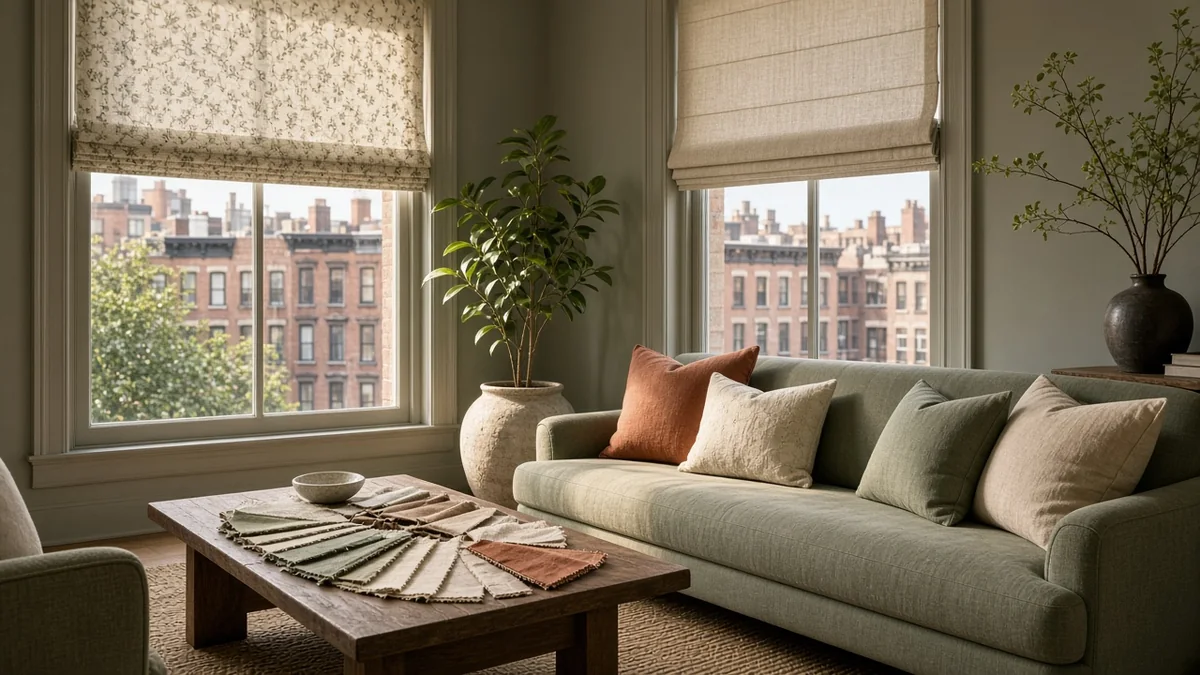
NEW YORK — Most people pick a window shade once and live with it for a decade. The Shadery wants them to come back for more. The startup, which makes motorized Roman shades with fabric that can be swapped out without replacing the hardware, has raised a $3 million seed round led by Lerer Hippeau, with participation from Corazon Capital, Amity Supply, SuperAngel.Fund and OpenSky Ventures, founder and CEO Matt Weiler told AlleyWatch.
The Product
Each Shadery shade comes in two parts, according to the AlleyWatch interview: a motorized console that mounts at the window and a made-to-order fabric panel that hangs from it. The console is the same on every shade and adjusts to fit windows from 24 to 60 inches wide.
It runs on a rechargeable battery that charges over USB-C, so there’s no wiring or electrician, and Weiler said installation takes a few minutes. The shades connect to Apple Home, Google Home and Amazon Alexa through Matter over Thread, with no separate hub or subscription, and they also work with a remote.
A complete shade starts at $699, and replacement fabric starts at $349, the company told AlleyWatch. The launch collection includes 11 solids and nine prints in 40 colorways, with new prints planned each season and artist and designer collaborations starting in 2027. Business of Home reported a price range of $699 to $999 per window.
The Founder
Weiler isn’t from the window-treatment business. Business of Home describes him as the former chief financial officer of Daily Harvest and a former vice president of finance at Glossier. He told AlleyWatch the idea started at home: he had to choose between shades he liked looking at and ones that worked with the rest of his house, and when one later broke, getting it fixed meant tracking down a designer he hadn’t worked with in four years.
“Windows felt like one of the last things in the home that still worked the old way,” he told AlleyWatch. “The fabric is the part people care about, and there was no good reason it had to be permanently attached to the hardware.”
He said the company spent two years engineering its own hardware.
The Business Model
The Shadery sells direct to consumers at its website and to interior designers through a trade program with a 15% discount, Weiler said. The core idea is the return purchase: after buying a full shade, customers keep the hardware and come back for fabric for a new season, a redecoration or a move.
Every shade is made to order. “We produce what customers buy rather than holding large amounts of finished inventory,” Weiler told AlleyWatch. Many customers start with a Welcome Kit of swatches, a measuring tape and guidance on choosing shades.
The company opened to the design trade, and to consumers by invitation, on Nov. 9. Over the next six months, Weiler said, it plans to deliver its first shades, open its waitlist more broadly in early 2027, add customers’ own material to the trade program, release its first seasonal prints and offer professional installation.
Lessons for Consumer Founders
Turn a one-time purchase into a repeat one. Window shades are a classic “buy once” category. By separating the part that wears out of style (the fabric) from the expensive part (the motor and hardware), The Shadery creates a reason for customers to return. Any founder selling a durable product can ask the same question: what part of this could customers buy again?
Sell to the people who specify the product. Interior designers decide what goes on a lot of windows. A trade program with a discount, a dedicated account manager and swatches for active projects, all of which Weiler described, is a way to reach many homes through one relationship.
Hardware makes investors nervous. Show, don’t tell. Weiler was direct about the hardest part of raising. “Hardware. Investors are right to be cautious about consumer electronics,” he told AlleyWatch. What helped, he said, was putting working hardware, real fabric and the brand in front of people. “Watching a shade go up and change fabric explains the idea faster than any slide.”
Made-to-order keeps cash free. Producing only what customers buy limits inventory risk, a real advantage for a small company with a $3 million seed round.
Build more yourself before you raise. Weiler’s advice to New York founders without fresh capital: “Look hard at what you can build yourself before you go out to raise.” He said the company built much of its website, a room-preview tool and internal systems with AI, which he said “has changed how far a small team can get.”
What’s Next
Weiler told AlleyWatch the Roman shade is the company’s first product, not its only one, and that it built the hardware as a platform it hopes to extend to more of the window. For now, the test is whether customers who buy a shade come back to buy the fabric.
Entrepreneurs Of New York is an independent publication and is not affiliated with The Shadery or its investors.