

New York Bans AI Chatbot Toys for Five Years Starting Feb. 22. What Toy Shops, Retailers and Hardware Founders Need to Know
Gov. Kathy Hochul signed S.9408A/A.11144B on Nov. 24, putting a five-year moratorium on making, distributing or selling children's toys with built-in AI companion chatbots in New York. The law takes effect Feb. 22, 2027, and the attorney general can seek penalties of up to $15,000 per day per violation. Here's what the law covers and what store owners and toy startups should do now.
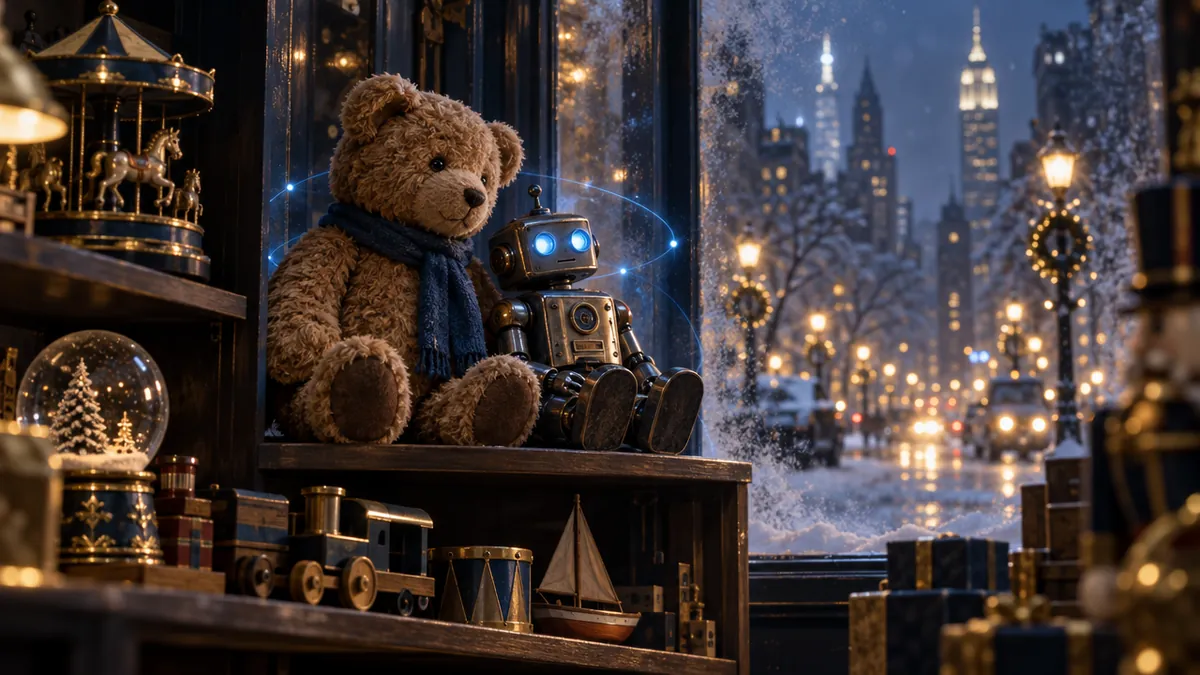
NEW YORK — Talking teddy bears and chatty toy robots are about to be off-limits in New York. Gov. Kathy Hochul on Nov. 24 signed a five-year ban on AI chatbot toys, barring the manufacture, distribution and sale of toys with embedded or integrated AI chatbots in the state.
The ban doesn’t start this holiday season. According to The Toy Association, the law takes effect 90 days after signing, on Monday, Feb. 22, 2027. NBC News reported that New York is the second state to ban the toys, after California.
For toy shops, gift retailers, online sellers and New York hardware startups, that leaves about three months to sort out inventory and product plans.
What the Law Says
The bill, S.9408A, was sponsored by Sen. Andrew Gounardes, and Assemblymember Rebecca Kassay, who said she worked with him to champion the measure. The matching Assembly bill is A.11144B. The Assembly’s bill record shows it passed the Senate on June 1 and the Assembly on June 2. It was delivered to the governor and signed as Chapter 416 on Nov. 24.
It adds a new Article 48 to the General Business Law. The key line says no person or business entity “shall manufacture, exchange, hold for sale, distribute, or sell any chatbot toy in this state.”
The definitions matter:
- A chatbot toy is a children’s toy with an “AI companion” embedded in or integrated with it.
- A children’s toy uses the federal definition in 15 U.S.C. § 2057c: a consumer product designed or intended by the manufacturer for a child 12 or younger to use when playing.
- An AI companion uses the definition already in General Business Law § 1700. It is an AI system designed to simulate a sustained human-like relationship by remembering past interactions and preferences, asking unprompted emotion-based questions and keeping up an ongoing conversation about personal matters.
That last definition has carve-outs, including systems “primarily designed and marketed for providing efficiency improvements or, research or technical assistance.” Whether a given product falls inside the definition will depend on how it works and how it is marketed.
The attorney general enforces the law and can seek court orders and civil penalties of up to $15,000 per day for each violation. The text doesn’t require proof that anyone was harmed. The ban expires five years after it takes effect.
Why Albany Acted
The governor’s office pointed to testing by a national consumer watchdog of chatbot toys marketed to children ages 3 to 12. It said some toys talked in depth about sexually explicit topics, told kids where to find matches in the home and acted upset when a child had to leave. It also said some toys had few or no parental controls and could record a child’s voice or scan their face.
“Parents shopping for gifts for the holidays or any other occasion should not have to worry that dangerous chatbots disguised as toys could expose their children to inappropriate conversations, manipulate their feelings or put their privacy at risk,” Hochul said.
The toy industry pushed back on the approach. The Toy Association said it has “maintained a consistent position opposed to moratoriums and in support of a study approach,” and that it will share compliance guidance with members as it becomes available.
The law builds on New York’s October rules on AI chatbots and minors, which we covered for founders.
What Retailers Should Do Now
- Audit your shelves and listings. Look for dolls, plush toys and robots that connect to the internet and hold open-ended conversations. Check packaging, product pages and manuals.
- Plan your sell-through. Selling is still legal until Feb. 22. After that, the law also covers holding a chatbot toy “for sale.” Slow down reorders and talk to suppliers about returns.
- Check online orders. If you ship to New York customers, the ban on selling in the state may affect your e-commerce listings too. Ask a lawyer how it applies to your setup.
- Train staff. The governor urged parents to check whether a toy includes an AI companion, what it collects and whether it allows open-ended conversation. Staff who can answer those questions build trust.
What Hardware Founders Should Do Now
- Map your product to the definitions. A product for kids 12 and under that remembers conversations and asks emotion-based questions is the clearest risk. Educational or utility products may be treated differently, but get legal advice before relying on an exception.
- Plan for a New York gap. If your product is covered, you may need to geofence sales, change features for New York or delay a launch here.
- Watch for changes. The bill record lists an approval memo with the signing. We couldn’t review its text, so check the final chapter law before you make decisions.
The Bottom Line
New York has given businesses one more holiday season, not a pass. Anyone who makes or sells talking, AI-powered toys for young children should use the next three months to decide what stays on the shelf after Feb. 22, 2027.