

Film Shoots on Your Block, AI Training From the City, BID Board Rules: The Dec. 1 Council Hearing NYC Shop Owners Should Know About
The City Council's Committee on Small Business will hear five bills on Dec. 1, including a proposal to measure how film and TV shoots affect nearby businesses' sales, a city AI and technology training program for small business owners, and a 30-day notice rule for BID board members. What each bill does, what you can do about a shoot today, and how to testify.
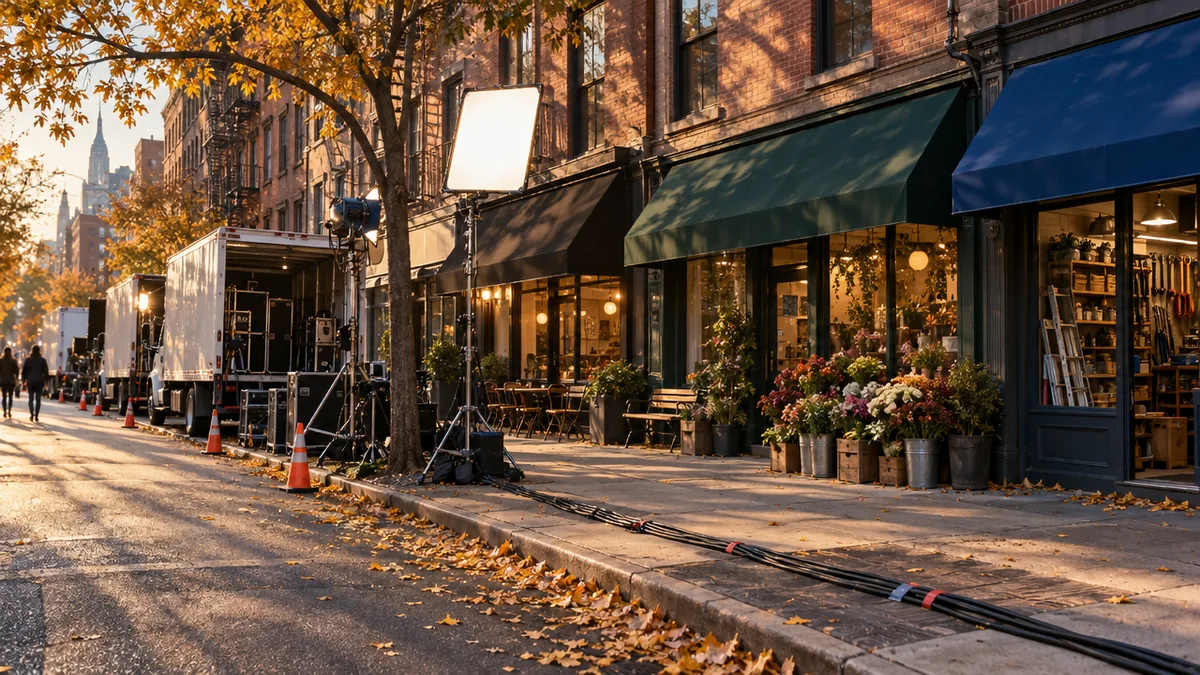
NEW YORK — If a film crew has ever parked trucks in front of your store for three days, you already have an opinion about Intro 878. On Tuesday, Dec. 1, the City Council will hear it.
The Council’s Committee on Small Business meets at 1 p.m. at 250 Broadway, 8th floor, Hearing Room 2, with five bills on its final agenda. A hearing is not a vote; any of these bills would still need committee and full Council votes. But hearings are where owners can put their experience on the record, and where bills often get rewritten.
Intro 878: Measuring What Film Shoots Cost Neighborhood Stores
Intro 878, sponsored by Council Member Christopher Marte with Farah N. Louis and Virginia Maloney, was introduced April 30. The proposed amended version, Int. 878-A, would require the Department of Small Business Services (SBS), working with the Mayor’s Office of Media and Entertainment (MOME) and other agencies, to:
- Study the economic impact of film and television production on local businesses, “including the effect on revenue due to filming activity,” and send a report to the mayor and Council speaker, posted on SBS’s website, within a year.
- Develop a plan, with local businesses and the film and TV industry, “to mitigate lost revenue attributable to filming activity.”
The wording has softened. As NYC Politics reported, the original bill called for a study of the “negative economic impact” of production. The amended draft, posted Nov. 2, drops “negative.” The mitigation plan stays. The bill would take effect immediately.
There is another side of the ledger. MOME says filming means 130,000 jobs for New Yorkers and billions of dollars for the city’s economy, including local businesses. A study would replace anecdotes on both sides with numbers.
What You Can Do About a Shoot Right Now
You don’t have to wait for a study. Under current MOME rules:
- You should get notice. MOME’s permit guidance tells productions to notify each merchant or neighbor directly affected (including by parking, base camps and meal areas) at least 48 hours before filming.
- Your door has to stay open. MOME says productions should always provide safe pedestrian walkways, and that you “will definitely be able to access your home, work and local business,” though you may be asked to pause briefly during a take.
- Escalate during the shoot, not after. Start with the production assistants on set or the NYPD officer assigned to larger shoots. If the problem continues, MOME asks you to call it immediately at 212-489-6710. After hours, a supervisor at the NYPD Movie/TV Unit can be reached at 646-739-9900. You can also file a film or television production complaint through 311.
If you testify on Intro 878, bring specifics: shoot dates, how long equipment blocked your frontage, and your sales on those days versus a typical week.
Intro 942: A City Program to Teach Owners About AI
Intro 942, from Council Members Virginia Maloney and Kevin C. Riley with five co-sponsors, would require SBS to set up a technology literacy training program for small business owners within a year of the law’s effective date. Training would have to include artificial intelligence and, at minimum, cover:
- How owners can use the technology in their operations.
- How to understand and keep up with the policies, terms and conditions that apply to users.
- How to identify tasks the technology can reliably perform, including whether it improves operations, productivity or customer service.
- How to decide whether a tool actually meets a need and is worth adopting.
The law would take effect 180 days after enactment. Owners who want help sooner can try free options such as the AI toolkit and workshops we covered earlier this month.
The Other Three Bills
- Intro 184 (Amanda C. Farías) would require any member of a business improvement district management association’s board who plans to resign to give at least 30 days’ notice. If your block has a BID, our explainer on how NYC BIDs work and what they cost is a good primer.
- Intro 61 (Chris Banks) would require SBS to create an online directory of NYCHA tenant-owned businesses, plus a marketing campaign to promote it.
- Intro 336 (Mercedes Narcisse) would create a three-year pilot with at least one small business incubator in a public housing facility in each borough, with offerings shaped by a study of residents’ needs.
How to Testify
According to the Council’s testimony page, you can testify in person, by Zoom web or by Zoom phone. In-person testimony does not require pre-registration; remote testimony requires signing up through the Council’s site. Written testimony is accepted in common formats (.doc, .rtf, .txt or .pdf) for up to 72 hours after the hearing closes. Anything you submit becomes public record, so leave out personal details you don’t want published. Interpretation requests go to translationservice@council.nyc.gov at least three business days ahead; questions go to hearings@council.nyc.gov.
Administration officials usually testify first, so plan for a wait. Keep remarks short and concrete: who you are, where your business is, what happened and what you want the bill to do.
The city has spent this year promising to cut red tape for small businesses. A committee hearing is one of the few places where owners get to tell lawmakers, on the record, what that should look like on their own block.